Best Cities for Techno in 2026: Berlin, Detroit, Chicago, Brussels and Beyond
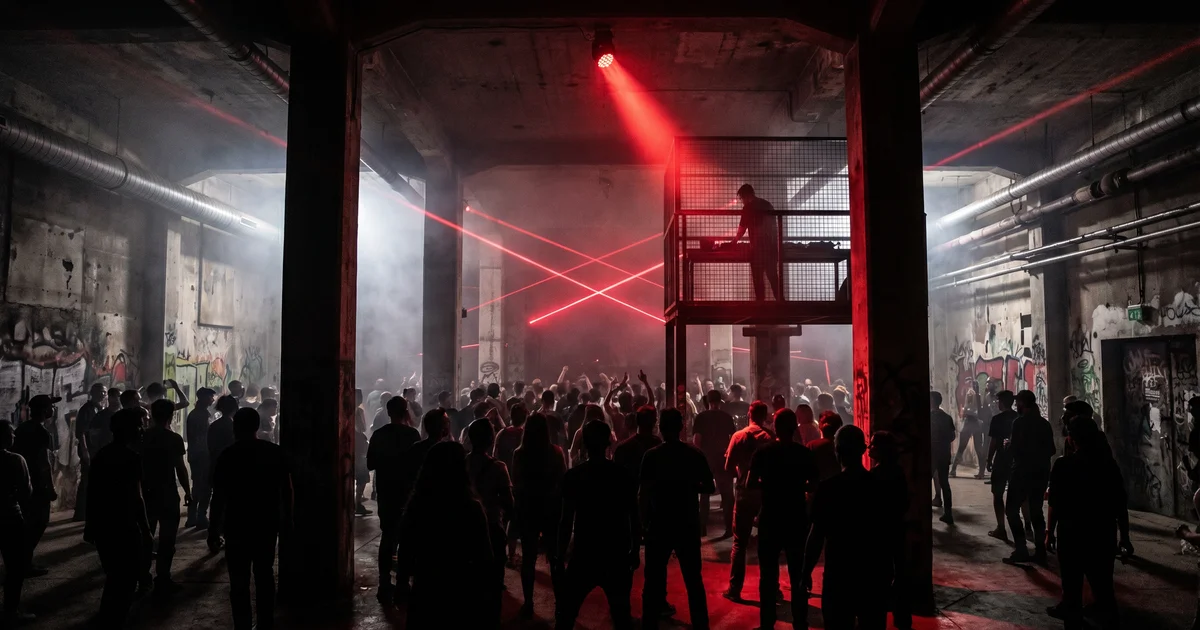
Dark industrial techno club interior with strobing lights and silhouetted dancers on a packed dance floor
From the birthplace in Detroit to the bunkers of Berlin — a definitive guide to the cities where techno lives, breathes, and evolves in 2026.

Maurício Amaro
June 2, 2026
Key Takeaways
- 1Berlin remains the undisputed global capital of techno culture, but the city's dominance is being genuinely challenged.
- 2Detroit is having a 2026 renaissance — Movement Festival, TV Bar, and a new generation of producers are reinvigorating the birthplace.
- 3Chicago's house and techno ecosystem (Smart Bar, Spybar) is one of the most underappreciated in the world.
- 4Tbilisi, Georgia has emerged as one of the most vital techno cities on Earth — Bassiani's influence is impossible to overstate.
- 5Brussels and Antwerp offer world-class club experiences without Berlin's lines and attitude.
- 6Getting into Berghain is unpredictable by design — dress dark, go alone or in pairs, speak German if you can.
Berlin: Still the Capital, But No Longer Unchallenged
Berlin's position as the global techno capital was established in the rubble of reunification and cemented over three decades of relentless, uncompromising club culture. That position has not been surrendered — but in 2026 it is being contested more seriously than at any point since the 1990s. Cities from Tbilisi to Detroit to Brussels are producing music, cultivating scenes, and building venues that stand comparison with anything Berlin has to offer. That said, the argument still starts and ends here.
Berghain / Panorama Bar
Berghain needs no introduction but deserves constant recontextualisation. The former power plant in Friedrichshain still opens Friday night and closes Monday morning. The Funktion-One sound system remains the standard against which all others are measured. Residents like Marcel Dettmann, Ben Klock, and Len Faki continue to define what the club stands for. The Panorama Bar upstairs offers a counterpoint — melodic house and disco where the Berghain floor is relentless industrial techno. In 2026, Berghain quietly introduced a capacity management system for Klubnacht weekends that has slightly improved queue management without compromising the essential unpredictability of the door.
Pro Tip
How to get into Berghain: Dress in dark, functional clothing — no designer labels, no colours. Go alone or in a group of two. Do not check your phone while waiting. Do not talk loudly in the queue. Speak German at the door if you can. Be sober. Do not explain why you want to get in. The bouncers — led by Sven Marquardt — are looking for people who are genuinely there for the music, not the Instagram post. Entry is approximately €40 for Klubnacht weekends in 2026. There is no guaranteed formula. Go on Sunday morning rather than Saturday night for the best chance and the best music.
Tresor
Tresor is Berlin's oldest continuously operating techno club, running since 1991. The current venue in a former power plant complex in Mitte has been open since 2007 and houses two rooms: the cavernous Globus upstairs and the low-ceilinged, pitch-dark Tresor basement. The basement is where the club earned its legend — concrete walls, industrial ventilation, the relentless 4/4 of Detroit techno played at architectural volumes. Jeff Mills, Underground Resistance, and Carl Craig have all played here repeatedly. The basement door policy is significantly easier than Berghain.
://about blank
://about blank (pronounced 'about blank') is a queer-friendly, politically engaged outdoor-indoor club in Friedrichshain that consistently ranks among the best clubs in Europe. The outdoor garden — a sprawling wooded space with multiple bars and a covered stage — is one of the finest club environments on Earth in summer. The programming spans techno, house, experimental, and live electronic. The door policy is inclusive by philosophy — they are far more interested in attitude than aesthetics.
Detroit: The Birthplace, Reborn
Techno was invented in Detroit in the mid-1980s. Juan Atkins, Derrick May, Kevin Saunderson — the 'Belleville Three' — created a new music from Kraftwerk, George Clinton, and the industrial landscape of a post-Ford city. That music changed the world. In 2026, Detroit is experiencing a genuine cultural renaissance, with the original pioneers still active and a new generation of producers connecting the dots between the city's past and its future.
Movement Festival (Memorial Day Weekend)
Movement Electronic Music Festival at Hart Plaza in Detroit — held each Memorial Day weekend — is the most important techno festival in North America and one of the most significant in the world. The festival's footprint spans multiple outdoor stages on the banks of the Detroit River, with the Canadian skyline of Windsor visible across the water. The 2026 lineup continued Movement's tradition of balancing heritage acts (Underground Resistance, Model 500) with contemporary global artists and emerging Detroit producers. Tickets are affordable by festival standards — typically $50–$100 for the weekend.
TV Bar and the Underground Club Scene
TV Bar in Detroit's Corktown neighbourhood has become the essential local club for underground electronic music — a small, sweaty, no-frills space where the city's techno community actually goes out on weekends. Populate the area around Michigan Avenue on a Friday night and you'll find an ecosystem of bars and clubs that are genuinely rooted in the city rather than catering to tourists. The Electronic Music Collective of Detroit and other local organisations continue to nurture emerging producers and maintain the community infrastructure that made the original scene possible.
Pro Tip
Detroit dress code and door policy: Detroit's techno clubs have an entirely different energy from Berlin — more communal, less hierarchical, genuinely welcoming to newcomers. There is no dress code beyond looking like you belong at a warehouse party. Doors open late (midnight or later) and parties can run until 8–10 AM. The local crowd tends to dress in streetwear, vintage, and workwear rather than Berlin's all-black aesthetic.
Chicago: House Roots, Techno Branches
Chicago invented house music at the Warehouse club in the early 1980s — and that DNA runs through the city's entire electronic music culture to this day. Chicago's techno and house scene is one of the most sophisticated and least commercially compromised in the world, partly because it operates almost entirely for local audiences rather than international tourists.
Smart Bar
Smart Bar, located beneath the Metro music venue on North Clark Street, has been running since 1982 — making it one of the longest-running dance clubs in North America. The low-ceilinged basement room with its legendary sound system has hosted everyone from Larry Heard to Derrick May to a pre-fame Frankie Knuckles. In 2026, Smart Bar continues to book a mix of local legends and international artists while maintaining the low-key, genuinely music-focused atmosphere that has defined it for four decades. No bottle service. No VIP. No nonsense.
Spybar
Spybar in River North is the other essential Chicago underground club — a basement space beneath a hotel that has been hosting serious DJ nights since 1997. The programming leans toward deeper, more melodic techno and house than Smart Bar's more eclectic range. The crowd is older, more experienced, and there to dance rather than socialise. Cover is typically $10–$20.
Brussels and Antwerp: Belgium's Techno Axis
Belgium punches far above its weight in electronic music. Tomorrowland in Boom is the most visited festival on the planet. But beyond the spectacle, Belgium has cultivated serious underground club scenes in both Brussels and Antwerp.
Fuse (Brussels)
Fuse in Brussels has been running since 1994 and is the cornerstone of Belgian underground techno. The club books an extraordinary roster of international artists and maintains a strict no-phones policy. The programming is consistently excellent — harder, more industrial techno than Berlin's more melodic tendencies. Fuse's Saturday nights are a Brussels institution.
Tomorrowland (Boom, near Antwerp)
Tomorrowland is not a techno club in the traditional sense — it is the world's most produced festival experience. But it has done more to bring electronic music to mainstream global audiences than any other single event, and the Resistance stage (curated by Adam Beyer's Drumcode label) offers genuinely serious techno programming within the festival context. If you have tickets for 2026 (Weekend 2 still has limited availability as of June), the Resistance stage is the highlight for serious techno fans.
Amsterdam: ADE, Shelter, and Radion
Amsterdam's club scene is underrated relative to its cultural output. The city's contribution to electronic music — from the early rave scenes of the late 1980s to the global influence of ADE — is enormous.
Shelter and Radion
Shelter in Amsterdam North (accessible via a free ferry from Central Station) is one of the best underground clubs in Europe — a former bomb shelter with a 2,500-person capacity, outstanding sound, and programming that consistently books the most interesting international artists. Radion in Amsterdam West is a converted television studio with a large outdoor area and a reputation for long, marathon club nights that frequently run from Friday night to Sunday morning.
London: Fabric and the Enduring Underground
London's relationship with techno is complex — the city's contribution to dance music culture runs from acid house to drum and bass to UK garage and beyond, often intersecting with but not fully belonging to the techno lineage. But Fabric, since 1999, has been the standard-bearer for serious underground club culture in the UK.
Fabric: fabricfridays and Saturday Nights
Fabric's Friday nights (branded as fabricfridays) have historically focused on drum and bass and UK club music, while Saturday nights have leaned toward techno and house. The three-room venue in a former cold-storage facility in Farringdon has one of the finest sound systems in the world. Fabric survived a near-closure in 2016 when Islington Council revoked its licence following two drug-related deaths — the global campaign to save the club resulted in its reopening with enhanced drug safety measures and is now seen as a landmark moment in the UK's relationship with club culture.
Bonus Cities: Tbilisi, Prague, Belgrade
Tbilisi, Georgia: Bassiani and the New Frontier
Tbilisi's emergence as one of the world's most important techno cities over the past decade is one of the most remarkable cultural stories in electronic music. Bassiani — located beneath the Dinamo Arena football stadium — is a club that combines world-class programming with genuine political significance. When Georgian authorities raided Bassiani in 2018, thousands of clubbers took to the streets in protest, dancing outside the parliament building in a demonstration that became global news. In 2026, Bassiani continues to operate as both a club and a cultural institution, booking the finest international artists alongside Georgia's extraordinary homegrown scene.
Prague and Belgrade: Emerging Alternatives
Prague's Ankali club and the city's growing underground scene offer excellent techno programming at prices that make Berlin look expensive. Belgrade's Drugstore — housed in a former factory on the banks of the Sava river — is one of Serbia's most respected clubs, with Kptm (Club Kptm) offering an even more underground alternative. Both cities benefit from the same factors that made Tbilisi a destination: affordable living costs, large student populations, and a genuine local hunger for the music rather than the scene.
Frequently Asked Questions
What is the best city for techno music in 2026?+
Berlin remains the global capital of techno culture in 2026 — Berghain, Tresor, and ://about blank are still the standard-bearers. However, Tbilisi (Bassiani), Detroit (Movement Festival, TV Bar), Chicago (Smart Bar, Spybar), and Brussels (Fuse) are all serious alternatives with their own distinct character.
How do you get into Berghain in Berlin?+
Wear dark, functional clothing with no designer labels. Go alone or in a group of two — never more than four. Do not check your phone in the queue. Be sober and calm. Speak German at the door if you can. Do not explain yourself. Sunday morning (6–10 AM) is the best time for both entry success and music quality. Entry costs approximately €40 for Klubnacht weekends in 2026.
Is Detroit still relevant to techno in 2026?+
Absolutely. Detroit — the birthplace of techno — is experiencing a cultural renaissance in 2026. Movement Festival at Hart Plaza is the most important techno festival in North America. TV Bar in Corktown and a new generation of Detroit producers are keeping the city's underground scene alive and evolving.
What makes Chicago's club scene different from Berlin's?+
Chicago's scene is rooted in house music (invented at the Warehouse in the early 1980s) and has a more communal, less hierarchical character than Berlin. Smart Bar and Spybar are genuinely local institutions with no VIP culture or bottle service. The focus is entirely on music and dancing, with an older crowd that has been part of the scene for decades.
Why is Tbilisi's techno scene so important?+
Tbilisi's Bassiani club combines exceptional international booking with a scene that carries genuine political significance — the 2018 government raids and subsequent protests showed how deeply the club is embedded in Georgian civil society. The city's economic conditions (very low costs, large youth population) and the intensity of local appetite for underground electronic music have created one of the most vital club scenes in the world.
What is fabricfridays at Fabric London?+
fabricfridays is the branding for Fabric's Friday night programme, which has historically focused on drum and bass, jungle, and UK club music. Saturday nights at Fabric lean toward techno and house. The club runs in a former cold-storage facility in Farringdon and operates from 11 PM to 6 AM on weekends.
Things to do in Berlin tonight
Bar crawls, club tours, skip-the-line entry & more · via GetYourGuide
Powered by GetYourGuide — affiliate link
🎟️ Things to do in Berlin tonight
Bar crawls, night tours, skip-the-line entry & more · via Klook
Powered by Klook — affiliate link
Hotels in Berlin
Compare hotels, apartments & guesthouses
Powered by Booking.com
About the Author
Maurício Amaro
Maurício Amaro has spent 15 years covering nightlife, electronic music, and urban culture across four continents. Equal parts music nerd, map obsessive, and night owl — with a soft spot for rooftop bars, obscure techno labels, and late-night tacos. Neurodivergent, proudly chaotic, and always at the back of the room near the speakers.
Sources and Further Reading
Explore More
Share this guide
Stay in the Loop
Get the best nightlife guides, city spotlights, and event picks delivered to your inbox. No spam, just vibes.
Find Parties Near You