Best Clubs in Paris 2026
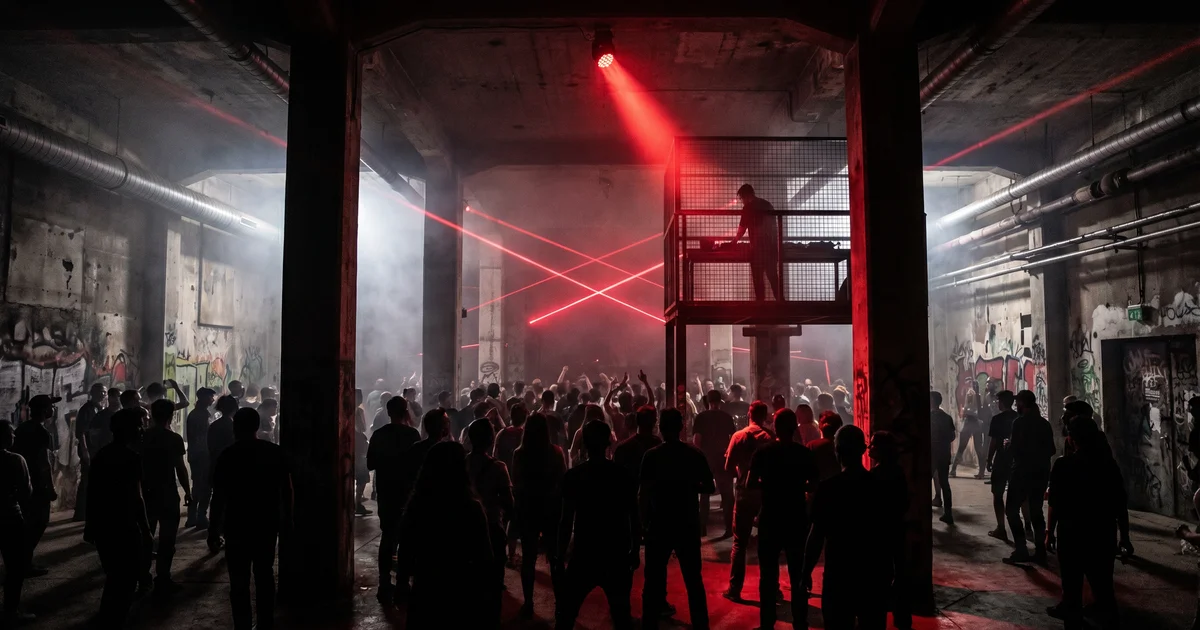
Dark atmospheric interior of an underground Paris techno club with dramatic lighting and a packed dance floor
Rex Club, Fvtvr, Essaim, La Station, Djoon, Nodd and more — the definitive guide to Paris's best clubs right now.

Maurício Amaro
April 18, 2026
Key Takeaways
- 1Rex Club is Paris's most historically significant club, operating since the 1980s with a Funktion-One system and a legacy that includes Laurent Garnier and Daft Punk.
- 2Essaim and Fvtvr are the two most respected contemporary techno clubs — Essaim for intimate curation, Fvtvr for high-impact international bookings.
- 3La Station at Porte d'Aubervilliers is the most politically engaged venue, closely linked to queer and grassroots collectives with adventurous programming.
- 4Nodd Club in La Défense is unique in Europe: daytime parties with a panoramic Paris skyline view, focused on house and minimal.
- 5Djoon in the 13th is the cornerstone of Paris's soulful house and disco community — intimate, warm, and music-first.
- 6Paris clubs do not fill up until 1 AM — arriving before midnight means an empty dance floor. Plan accordingly.
Paris has spent decades being underestimated as a club city. Berlin gets the column inches, London gets the cultural capital, and Amsterdam gets the tourist traffic. But Paris, quietly and on its own terms, has built one of the most diverse and genuinely excellent club scenes in the world. The city that gave electronic music Laurent Garnier, Daft Punk, and a generation of house and techno selectors now hosts a constellation of venues that range from legendary institutions to cutting-edge newcomers — and in 2026, the scene has never been stronger.
This guide covers the ten best clubs in Paris right now, ranked not by hype but by what they actually deliver on the night: sound quality, programming depth, crowd energy, and that indefinable sense that you are somewhere that matters. Whether you are a first-time visitor trying to find your feet or a seasoned clubber looking for something new, this is where to go.
Rex Club — The Institution
There is no conversation about Paris clubs that does not begin with Rex Club. Operating since the 1980s in the 2nd arrondissement, Rex has played a central role in introducing electronic music to France. The room is dark, focused, and deliberately no-frills: a single dance floor, a Funktion-One sound system that is among the finest in Europe, and a programming philosophy that has remained consistent for four decades. Laurent Garnier held a residency here that defined French techno. Daft Punk played early sets here. Detroit legends made their European debuts here.
In 2026, Rex Club continues to book with the same rigour. Friday nights are house-focused, Saturdays lean techno and electro, and the occasional special event brings in names that sell out within hours. The door policy is selective but not hostile — dress practically, arrive after midnight, and know the name of the DJ you are there to see. Rex does not do spectacle. It does sound, and it does it better than almost anywhere in Europe.
Essaim — Minimalist Precision
Essaim opened in the 10th arrondissement in late 2024 and immediately established itself as one of the most important new clubs in Paris. The concept is radical in its simplicity: a single dance floor, stripped-back design, an exceptional sound system, and a booking policy that prioritises long, attentive DJ sets over peak-time crowd-pleasing. There are no lasers, no LED walls, no Instagram moments engineered into the architecture. There is only the music and the room.
The crowd at Essaim is knowledgeable and engaged in a way that is rare even in serious club cities. People come to listen as much as to dance. The programming spans techno, trance, and experimental club sounds, with a particular emphasis on artists who can hold a room for four or five hours without losing the thread. In May 2026, Essaim opens its new Main Room — a 350-capacity live concert space — expanding its programme while maintaining the intimate ethos that made it essential.
Fvtvr — High-Impact Techno
If Essaim is about restraint, Fvtvr is about impact. Located in the 5th arrondissement, Fvtvr is Paris's most reliable destination for high-energy techno with major international bookings. The production setup — sound, lights, and room design — is built for intensity, and the programming reflects that: this is where you go when you want to see a big name in a focused, no-frills environment and dance until your legs give out.
The crowd at Fvtvr is younger and more mixed than at Rex or Essaim, with a significant proportion of visitors from outside Paris who have come specifically for the line-up. That can mean a slightly less cohesive atmosphere on some nights, but when the booking is right and the room is full, Fvtvr delivers some of the most intense club experiences in the city. Check the programme carefully and book in advance — the best nights sell out weeks ahead.
La Station — Gare des Mines
La Station at Porte d'Aubervilliers is the most politically and culturally engaged venue on this list. Housed in a former coal train station on the edge of the périphérique, it is closely linked to queer and grassroots collectives, giving it a strong sense of community and political edge that is rare in European clubbing. The programming is deliberately adventurous: experimental and deconstructed club, high-energy techno, baile funk, and everything in between.
La Station is not just a club — it is a cultural hub. The spacious outdoor area comes alive in summer for warm-weather parties that feel more like community gatherings than commercial events. Multiple rooms open for larger events, and the crowd is consistently one of the most diverse and welcoming in Paris. If you want to understand what Paris club culture looks like when it is at its most vital and community-driven, La Station is essential.
Djoon — Soulful House and Disco
Djoon in the 13th arrondissement occupies a completely different corner of the Paris club map. Where Rex and Fvtvr deal in techno and intensity, Djoon deals in warmth, groove, and musical depth. The club is a cornerstone of Paris's soulful house and disco community, welcoming selectors who dig deep into funk, soul, Afro house, and the deeper end of house music. The dance floor is intimate, the sound system is finely tuned for warmth rather than impact, and the crowd is there for the long haul.
Djoon represents a side of Paris nightlife that is often overlooked by visitors focused on techno. The city has a deep and genuine love for soulful, groove-driven music that stretches back to the disco era, and Djoon is its most faithful custodian. The crowd is loyal, knowledgeable, and genuinely invested in the music — you will not find people on their phones or talking over the DJ here. Book early for special events; the best nights sell out quickly.
Nodd Club — Daytime Parties with a View
Nodd Club in La Défense is genuinely unlike anything else in European clubbing. Located in the heart of Paris's business district, it is best known for its daytime parties that run from afternoon into evening, with a terrace overlooking the Paris skyline. The setting is as much a draw as the music: dancing in daylight with a panoramic view of one of the world's most beautiful cities is an experience that has no equivalent anywhere else.
Line-ups focus on house and minimal, often featuring major names from the international scene. The crowd is fashionable and mixed, with a significant proportion of people who have come specifically for the visual experience as much as the music. Nodd is not the place for a late-night techno session — it is the place for a Sunday afternoon that turns into a perfect early evening. Check the programme for their monthly Panorama series, which consistently delivers the best bookings.
Badaboum — The Reliable Neighbourhood Club
Badaboum in the 11th arrondissement is the kind of club that every city needs but few have: a long-standing fixture that balances accessible bookings with credible underground programming, located in a lively neighbourhood with excellent transport links and a compact but powerful main room. Operating for over a decade, Badaboum has maintained its reputation by booking with genuine taste rather than chasing trends.
The line-ups move fluidly between house, techno, and bass-driven sounds, attracting a mixed crowd of locals and visitors. The bar area and live space host concerts earlier in the evening, making Badaboum a good option if you want to start your night with a live set before moving to the dance floor. Entry is rarely expensive, and the door policy is relaxed by Paris standards. For a high-energy night without leaving the city centre, Badaboum is the most reliable option.
Point Éphémère — Canal Saint-Martin Culture Hub
Point Éphémère by the Canal Saint-Martin is more than a club — it is a multidisciplinary cultural space that happens to host some of the best club nights in Paris. The programme spans electronic club nights, live concerts, exhibitions, and workshops, with a relaxed bar and rooftop area that comes alive in summer. Club nights range from disco and house to harder techno, depending on the party, and the crowd reflects that variety.
The canalside location is one of the most atmospheric in the city, and the outdoor area in summer creates one of the best pre-club experiences in Paris. Point Éphémère is a good option if you want to spend an entire evening in one place — arrive early for drinks and the canal view, stay for the club night. The programming is consistently interesting without being inaccessible, making it one of the best entry points for visitors new to the Paris scene.
La Java — History and Contemporary Energy
La Java near République is one of Paris's oldest venues — it opened in 1922 as a dance hall and has reinvented itself multiple times over the past century. In its current incarnation, it is a hub for contemporary club culture, with an intimate, low-ceilinged dance floor that creates a high-pressure environment where sound and movement take centre stage. The programming moves fluidly between house, techno, and more playful, left-field club sounds.
The history of the building adds a layer of atmosphere that newer venues cannot replicate — you are dancing in a space that has hosted Édith Piaf, Django Reinhardt, and a century of Parisian nightlife. The crowd is diverse and music-first, with a strong contingent of regulars who have been coming for years. La Java is a good option for a mid-week night when the bigger clubs are quiet — the programming quality does not drop on Thursdays and Fridays.
Virage — Open-Air Industrial
Virage, set beneath the ring road near Porte de Saint-Ouen, is an open-air clubbing space that thrives during the warmer months. Its raw, industrial setting and large dance floor make it ideal for extended sets and high-energy parties that stretch from day into night. The venue is seasonal — it operates primarily from spring through autumn — but when it is open, it offers one of the most distinctive party environments in the city.
The crowd is young and enthusiastic, and the programming leans towards techno and high-energy house. Virage is not the most refined club on this list, but it compensates with energy and atmosphere. The open-air setting means the experience is weather-dependent, but on a warm Paris night with the right line-up, it can be extraordinary. Check the programme from April onwards for the best events.
Practical Information
Paris clubs operate on a very different schedule from cities like London or New York. Bars fill up from 9 PM, but clubs do not fill up until 1 AM, and the best atmosphere runs from 1 to 5 AM. Arriving before midnight will find you in an empty room. Most clubs close between 6 and 8 AM. Entry ranges from €10 to €25, with free entry before midnight at some venues. Drinks are moderately priced — a beer costs €5 to €8, a cocktail €12 to €18. The Paris metro runs until approximately 1:15 AM on weekdays and 2:15 AM on weekends, with night buses (Noctilien) covering the gaps. Uber is reliable throughout the city for late-night travel. The legal drinking age in France is 18, and ID is checked at the door of most clubs.
Frequently Asked Questions
What is the best club in Paris in 2026?+
Rex Club is the most historically significant and consistently excellent club in Paris, with a Funktion-One sound system and a legacy stretching back to the 1980s. For contemporary techno, Fvtvr and Essaim are the most respected options in 2026. For community-driven programming and adventurous bookings, La Station at Porte d'Aubervilliers is the most important venue.
What is the best techno club in Paris?+
Rex Club, Fvtvr, and Essaim are the three best techno clubs in Paris. Rex Club has the deepest legacy and the best sound system. Fvtvr has the biggest international bookings and the most intense atmosphere. Essaim is the most carefully curated and intimate. La Station is the best for experimental and deconstructed techno.
What time do Paris clubs open and close?+
Paris clubs typically open at 11 PM or midnight, but do not fill up until 1 AM. The best atmosphere runs from 1 to 5 AM. Most clubs close between 6 and 8 AM. Arriving before midnight will find you in an empty room — this is very different from cities like New York or Miami. Plan to arrive late and stay until the end.
How much does it cost to get into a club in Paris?+
Entry to Paris clubs ranges from €10 to €25, depending on the venue and the line-up. Many clubs offer free entry before midnight. Rex Club typically charges €15 to €20. Fvtvr and Essaim charge €15 to €25 for major events. Badaboum and Point Éphémère are generally cheaper at €10 to €15.
Do Paris clubs have a dress code?+
Paris clubs generally do not have a formal dress code, but they do have a vibe code. Dress practically and comfortably — you will be dancing for hours. Avoid overly casual sportswear at venues like Rex Club and Essaim. The most important thing is to look like you are there for the music, not for a night out. Trainers are universally acceptable.
Is Concrete Paris still open?+
Concrete Paris closed permanently in July 2024. The popular venue held its final party on the weekend of July 20th, 2024, ending a decade-long run as one of Paris's most beloved clubs. The closure was due to the venue's lease ending. The Paris scene has absorbed the loss well — Essaim, Fvtvr, and La Station have all grown in prominence since Concrete's closure.
Things to do in Paris tonight
Bar crawls, club tours, skip-the-line entry & more · via GetYourGuide
Powered by GetYourGuide — affiliate link
Hotels in Paris
Compare hotels, apartments & guesthouses
Powered by Booking.com
About the Author
Maurício Amaro
Maurício Amaro has spent 15 years covering nightlife, electronic music, and urban culture across four continents. Equal parts music nerd, map obsessive, and night owl — with a soft spot for rooftop bars, obscure techno labels, and late-night tacos. Neurodivergent, proudly chaotic, and always at the back of the room near the speakers.
Sources and Further Reading
Explore More
Share this guide
Stay in the Loop
Get the best nightlife guides, city spotlights, and event picks delivered to your inbox. No spam, just vibes.
Find Parties Near You